
Development progress.
Turnwise is in development. These early prototypes show the sensing materials and electronics taking shape, and we post our test results here as we go, including the problems we find.
Prototype
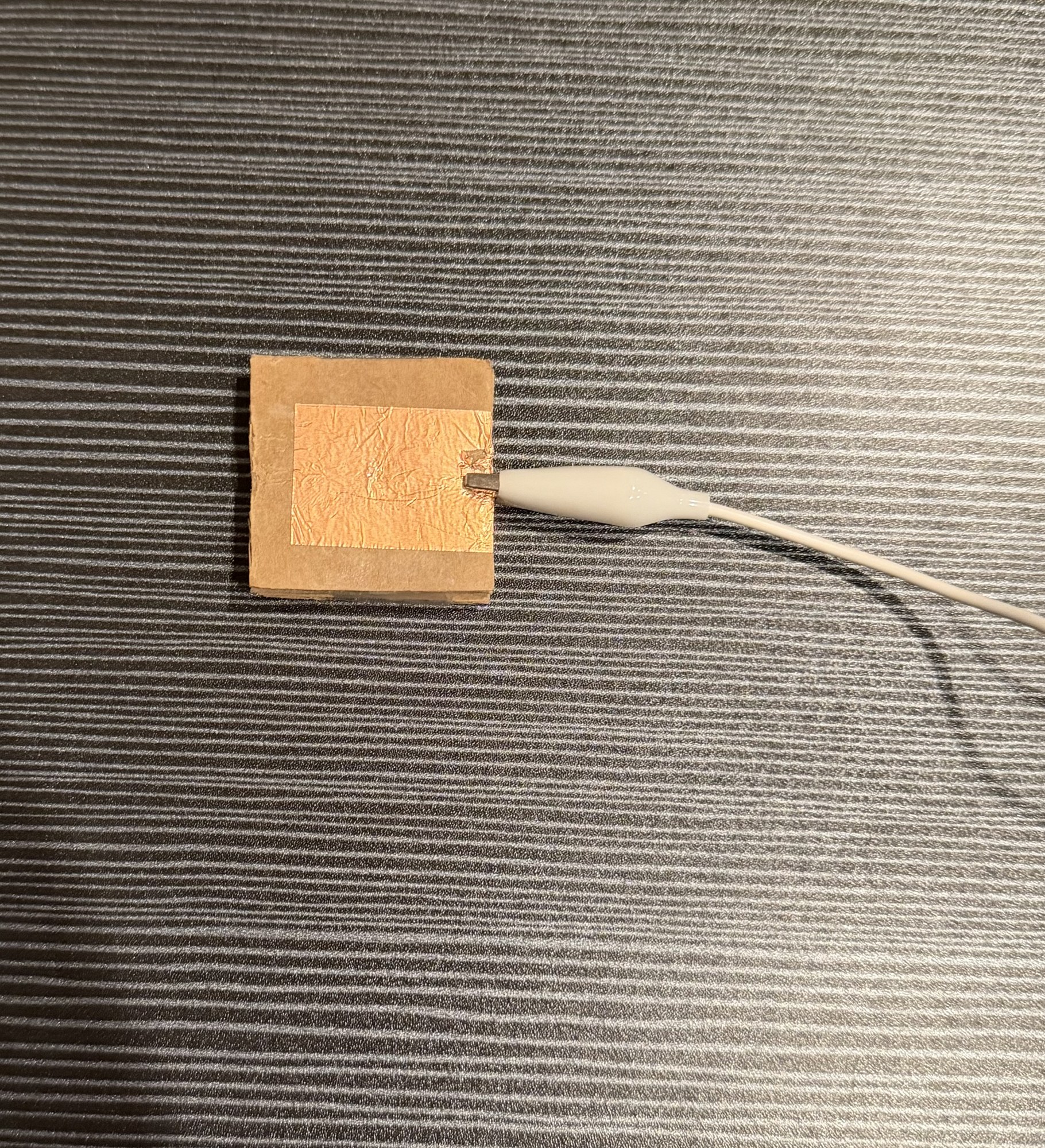
Sensor sample
Early sensing-material assembly with a test lead attached.
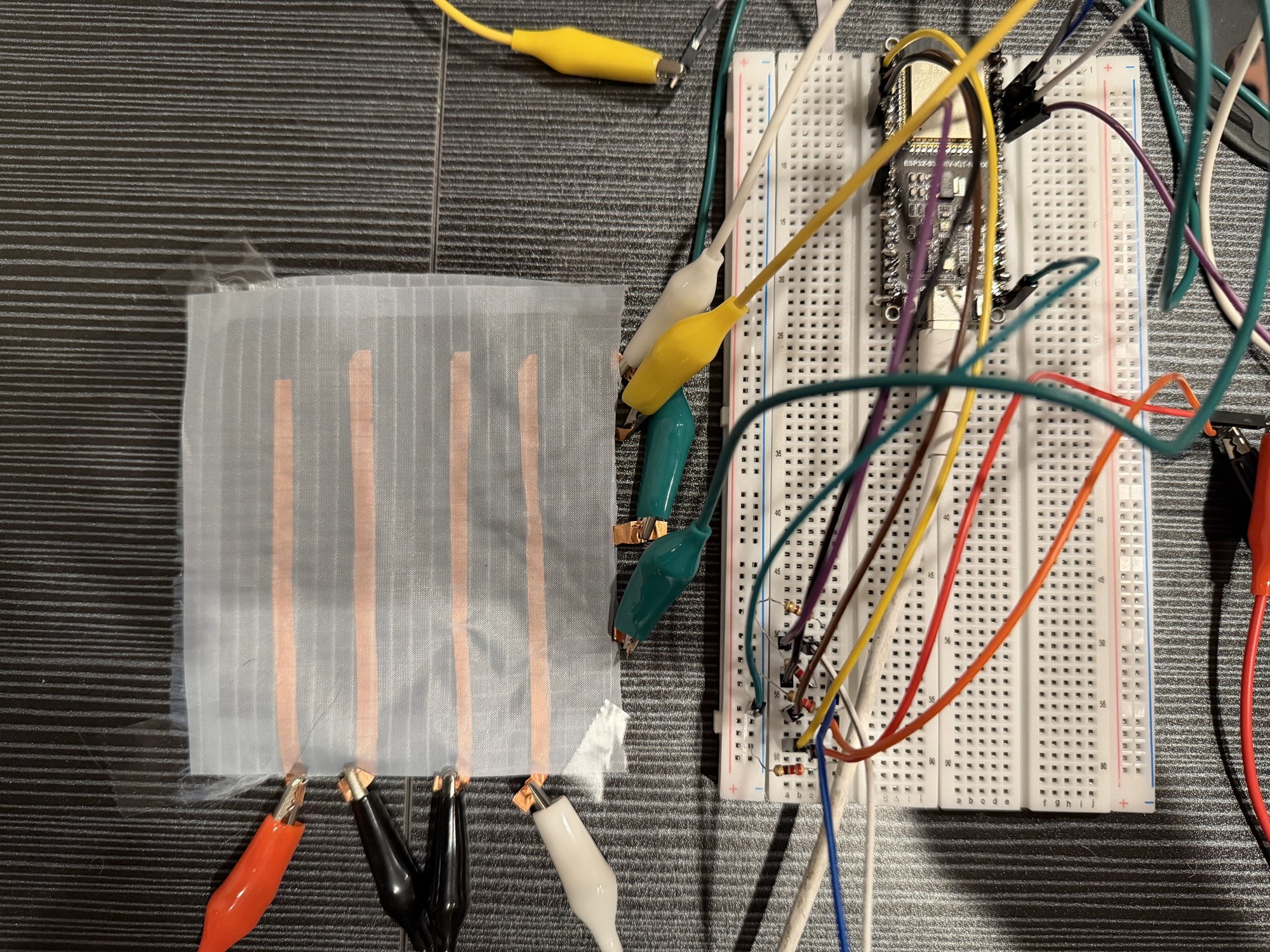
Breadboard test setup
Sensor strips connected to breadboard electronics.
Testing & validation
First pressure sensor
Large 1″ copper pads with Velostat between them conducted too easily and read as fully pressed even at rest. Narrow ⅛″ crossing strips solved it, and the sensor responded cleanly to pressure. This is why the mat uses thin crossing strips.
4 × 4 sensing grid
A 16-point grid of conductive strips on ripstop nylon, scanned one row at a time by an ESP32 microcontroller. Every point reads independently, and startup calibration zeroes out each point’s resting value.
Crosstalk and ghosting
Pressing two diagonal corners raised the unpressed corners by only 2–5% of the pressed reading. Pressing three corners produced no false “ghost” reading at the fourth. Remaining crosstalk comes from shared strips and is addressed by an op-amp readout circuit in the next build.
Live data, end to end
The grid streams over WiFi to a cloud database and into our iPhone app, which shows a live heatmap that updates about 2.5 times per second as the mat is pressed.
First calibration: too sensitive
Using known weights on a 0.5″ × 0.5″ pad, readings nearly maxed out around 30 mmHg. Clinically important pressures reach 100 mmHg and higher, so the sensor needs a wider range. Readings also crept up about 20% during the first minute under constant weight. Next: a spacer layer and an op-amp readout to extend the range, then full calibration on the fabric test patch.
Up next: 12 × 12 fabric test patch, range-extension tests, repeatability testing, and calibration from raw readings to mmHg.
Care-team feedback
Interview findings and pilot feedback to be added.